
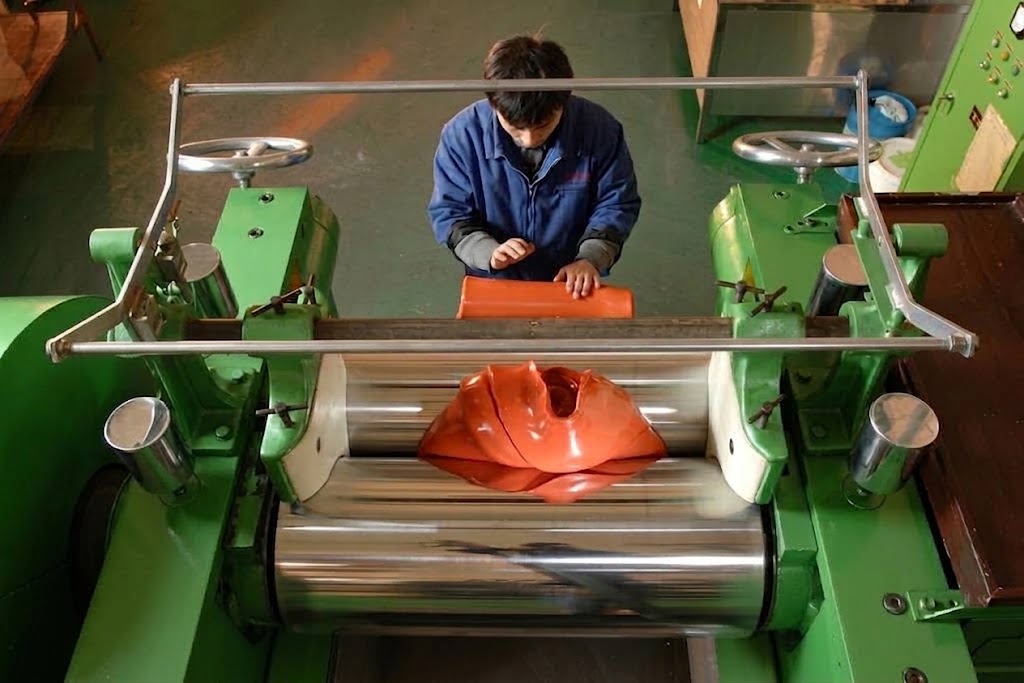
Getting a rubber molded part to perform properly in the field often takes more than choosing a standard off-the-shelf material. It usually starts with selecting or developing the right compound for the application, based on the environment, performance requirements and how the part will be used.
Attributes like UV resistance, heat resistance and oil resistance can be engineered directly into rubber before it's ever molded. Below, we answer the most common questions about how custom rubber compounding and molding work and how you can add these components into your day-to-day operations.
Rubber compounding is the process of formulating and mixing rubber materials to meet specific performance requirements for molded rubber parts. Rather than relying on a standard material, custom compounding allows performance attributes such as UV resistance, heat resistance, oil resistance, flexibility and hardness to be built into the material before it is molded into a finished part.
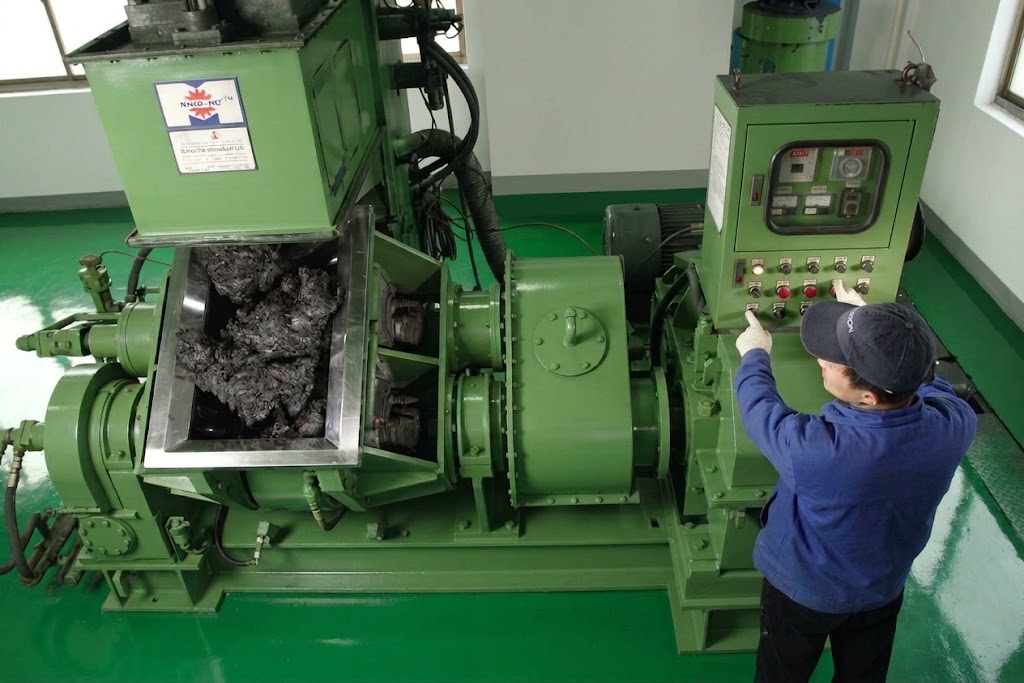
A rubber compound formulation generally includes the base polymer, reinforcing fillers, process aids and the curing system. The base rubber determines the compound's core properties. Additives such as activators, antioxidants and antiozonants help support cure performance and long-term aging resistance based on the service environment.
Reinforcing fillers such as carbon black can improve mechanical properties, including tensile strength, modulus and hardness. Process oils can improve mixing and processing, reduce energy consumption, support lubrication and tack, and help adjust the final hardness of the vulcanized rubber.
Finally, the vulcanization system forms cross-links between rubber macromolecules to create a three-dimensional network structure, giving the rubber its excellent physical and mechanical properties, including high strength and elasticity.
Before selecting a compound, it is important to define how the part will be used. Key application details include exposure to heat, oil, fuel, ozone, UV, chemicals, abrasion, compression, vibration and outdoor conditions. The right compound depends on matching those requirements to the material family and then validating performance through testing.
Materials available:
• Natural Rubber (NR)
• EPDM
• Nitrile (NBR)
• Hydrogenated Nitrile Butadiene Rubber (HNBR)
• Neoprene (CR)
• Styrene Butadiene Rubber (SBR)
• Polybutadiene (BR)
• Butyl (IIR)
• Acrylic (ACM)
• Ethylene acrylic elastomer (AEM)
• Silicone (VMQ)
• Viton (FKM)
• Perfluoroelastomer (FFKM)
• Fluorosilicone (FVMQ)
• High tensile strength and high elongation
• Good durability and excellent tear resistance
• Excellent elasticity
• Poor aging and poor oil resistance
• High filling property, good aging and ozone resistance
• Good water and steam resistance
• Low temperature resistance
• Poor self-adhesive and mutual viscosity performance, poor oil resistance
• Strong high-temperature resistance; specific temperature capability depends on the compound, application and exposure conditions
• Excellent ozone resistance and aging performance
• Good electrical insulation
• Special surface properties and physiological inertness
Natural rubber is produced from latex harvested from rubber trees. It is known for strong elasticity, good tensile properties and good processability, but its performance can be limited in applications involving oil, ozone, weathering or certain chemicals.
Synthetic rubber includes material families engineered to perform in specific operating conditions. Depending on the polymer selected, synthetic rubber can provide improved resistance to heat, oil, fuel, chemicals, ozone, weathering or low-temperature exposure compared with natural rubber.
Developing a custom rubber compound typically starts with the customer's application requirements, including operating environment, performance needs, regulatory requirements and expected service conditions. The defined process as follows:
1. Check the customer request and application environment
2. Prepare a small batch compound
3. Test the compound's performance
4. Set the pre-mix parameters
5. Run a batch of raw compound and test it
6. Trial the mold and validate processing properties
7. Inspect samples for appearance, dimensions and performance
8. Once samples are confirmed by customer, a formal recipe is issued
Testing can include basic physical properties such as hardness, specific gravity, tensile strength, elongation and tear strength. Additional testing may evaluate aging, oil resistance, low-temperature performance, ozone exposure, compression set, electrical properties, dynamic and static stiffness, salt spray resistance and product cleanliness, depending on the application requirements.
Lab equipment used to support this testing includes a tensile strength tester, ozone resistance tester, rheometer tester, Mooney viscosity tester, spectroscope, insulation tester, density tester and hardness tester.
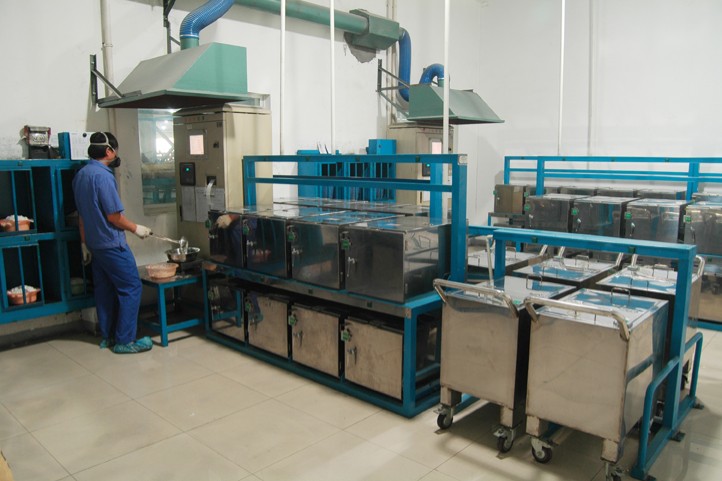
The process from material compounding to part molding and packaging can take place in a certified cleanroom environment when the application requires strict cleanliness or contamination control. This is particularly relevant for industries with strict cleanliness and contamination-control requirements, such as medical applications.
At Caplugs, quality systems in our New York and Pennsylvania facilities are certified to ISO 9001 and IATF 16949. Quality systems in our California and Texas facilities are certified to ISO 9001. Our cleanroom operations are certified to the ISO 13485 Quality Management System, and this certification is held by our Buffalo, NY facility, applying to all cleanroom medical products.
Environmental systems in the New York, Pennsylvania, and California facilities are certified to ISO 14001.
Furthermore, our Production Part Approval Process (PPAP) is a critical component of our comprehensive quality management systems, providing traceability, record retention and strict process controls to ensure specifications are met.
A range of custom compound options can be built into a rubber molded part to solve a specific problem or meet a specific requirement. Material additives such as heat or UV resistance can be easily compounded into rubber molded parts to ensure components can stand up to the elements.
For applications with strict safety requirements, UL94 5VA flame-resistant EPDM and CR are available, alongside wear-resistant SBR for parts that need to hold up to friction and abrasion.
For food, drug and medical applications, FDA and medical-grade silicone as well as FDA grade EPDM are available.
For demanding electrical or high-heat environments, high-temperature-resistant silicone with dielectric strength properties is also an option.
Custom coloring can also be compounded for branding purposes, while self-lubricated NR and CR help solve assembly issues.
For many custom rubber molded components, in-house compound mixing gives Caplugs tighter control over formulation, testing, processability and lot-to-lot consistency. Having compounding capability under our own roof allows our team to evaluate materials, run physical property and life testing, simulate real-world performance and confirm processability before a compound moves into production.
Each batch can be tested for key properties such as MDR, specific gravity, hardness, tensile strength and elongation, with additional testing added based on the customer’s requirements and our internal control plan. This may include heat aging, compression set, ozone resistance, low-temperature performance, brittleness and staining.
That level of control helps ensure the finished rubber molded component is built around the application requirements and can perform consistently in production.
When you need a custom rubber compound built around specific performance requirements, Caplugs can help identify the right material approach for your application.
Our team can support material selection, compound development, testing and molding to help ensure the finished part performs as required in the intended environment.
For applications with strict cleanliness or contamination-control requirements, Caplugs can also support cleanroom molding and packaging where required.
To learn more about how our custom rubber compounding and molding capabilities can support your industrial or medical application, contact us today at sales@caplugs.com or call 1.888.CAPLUGS.
For custom solutions, let the largest, most experienced in-house team of design engineers develop it for you from initial design to final production. We offer extensive custom molding solutions to meet your cost, performance, and production requirements.