Rubber Anti-Vibration Components Guide

Solving Vibration Problems at the Component Level: Rubber Anti-Vibration Guide

When working in industrial or off-highway settings, vibrating equipment can feel like an everyday part of the job. But vibration can have serious consequences, slowly damaging equipment, reducing operating efficiency and exposing workers to potential injury. 
Despite these risks, many industrial machinery and equipment owners still assume little can be done to control vibration. 

Here, we’ll explore the real dangers of vibration for off-highway equipment, heavy machinery, industrial equipment and automated systems, including common causes, practical solutions and the right rubber components and materials to keep machines running as they should.

What Causes Vibration in Equipment?

Vibration issues can be caused by everything from the way equipment has been manufactured to the way in which it performs and even the elements it encounters. 

Internally, misaligned components, rotating imbalances and the everyday use of engines, pumps and hydraulic systems can all cause vibrations that can radiate throughout equipment and lead to bigger, sometimes irreversible problems.

Externally, load fluctuations, rough terrain and harsh working conditions create shock and vibration from the outside in. These forces travel through a machine's frame and into its most sensitive components, compounding the vibrational forces already present from internal sources.

Additionally, thermal stress from temperature fluctuations can cause expansion and contraction of parts and machinery that lead to vibration, while start-up and shut-down cycles, conveyor systems and other automated equipment can further contribute to vibration problems. 

Consistent vibration causes damage across multiple systems simultaneously with bolts often loosening to create misalignment which can generate additional vibration that compounds the problem.

How to Reduce Vibration 

To reduce or eliminate vibration in equipment you first need to identify where the vibration is coming from, to intercept it before it spreads. This is known as vibration isolation.

One of the most effective ways to achieve isolation is through the use of components aptly named, rubber vibration isolators. These components get between the vibration source and the receiver to prevent the vibration from transmitting. 

Another way to reduce vibration is through vibration damping. Damping complements isolation by dissipating vibrational energy rather than simply blocking it. This is handled through the reduction of resonant peaks that cause vibration and ultimately wear on sensitive components.

In practice, this means incorporating vibration damping components at key points throughout equipment, protecting and allowing it to run more smoothly and quietly.

While no single component eliminates vibration entirely, a well-designed system of rubber vibration isolators and vibration dampers can address multiple sources simultaneously.

Where are Anti-Vibration Components Used?  

Off-Highway & Heavy Equipment

Engines & Transmissions

Internal combustion engines and transmissions generate significant vibrations. If not properly managed, off-highway equipment vibration can lead to a host of issues including bolt loosening, misalignment and component imbalances, which can all lead to further equipment damage.

A well-designed system including well placed anti-vibration mounts can reduce vibration in engines and transmissions and help avoid harmful resonance from spreading throughout equipment. 

Chassis & Body

The chassis and body of off-highway and heavy equipment absorb significant vibration and shock transmitted through the frame during operation. Bushings, sandwich mounts and bump stops work at key connection points to isolate vibration, reduce metal-to-metal contact and protect the broader structure from the effects of constant movement and load.

Operator’s Compartment

Both high and low-frequency vibrations occur during equipment operations that transmit directly into the cabin through the frame, floor and controls. For operators spending many hours behind the wheel, this constant exposure isn't just uncomfortable, it contributes to fatigue, reduced concentration, and over time, potentially serious repetitive strain injuries.

Properly arranged vibration dampers or isolators can effectively reduce or eliminate vibration at key transfer points including seats, steering columns, foot pedals and floor mounts, isolating the operator from the worst of what the machine and terrain generate. 

Cooling Systems

Vibration dampers also play an important protective role in cooling systems, shielding radiators and their piping from the excessive stress that off-road operations generate. 

Anti-vibration dampers help compensate for bracket misalignment and thermal expansion while absorbing impact energy from the vehicle, preventing stress that leads to cracked pipes, leaks and costly cooling system failures in the field.

Air Intake & Exhaust

To meet increasingly stringent carbon emission regulations, off-road internal combustion engines require more advanced exhaust treatment and more stable air intake systems. Properly integrating vibration damping components within these systems promotes more efficient and stable equipment operation.

Hydraulic Equipment

Hydraulic pumps generate vibration across a wide frequency range. High-frequency components may be audible as a whine or hum, indicating pump speed or vane/gear meshing. The rigid hoses connected to them can become a direct path for transmitting these vibrations to the vehicle chassis and cab. Isolating hydraulic components from the rest of the machine is an effective strategy to reduce noise levels and protect the broader system from fatigue and wear.

Industrial Equipment 

Suspension

Industrial equipment generates constant, wide-ranging vibration from motors, conveyors, presses, pumps and automation systems. Without proper industrial vibration control at the component level, this leads to premature wear, misalignment and unplanned downtime.

Hollow and shock absorption springs manage dynamic loads and absorb impact energy, while compression mounts, flange mounts and dome mounts provide stable isolation between vibrating machinery and surrounding structures. Rail strips protect frames from structure-borne vibration, and impact mounts handle sudden shock loads common in press and automated handling applications.

Other

•    Material Handling & Automation - Automated systems and material handling lines generate consistent, repetitive vibration that affects precision and uptime. Anti-vibration mounts and isolation components protect sensitive automation equipment and keep lines running reliably.

•    Rail - Rail applications demand precise vibration control across multiple systems, where component failure can have serious consequences for safety and performance. At the component level this covers coupling springs for rail bodies, bearings and mounting elements for powertrain applications and primary springs, torque supports, traction links, lateral bumpers, primary bushings, wheel set springs, coupling articulation and rolling rubber springs for bogie systems.

What is the Best Vibration Damping Material?

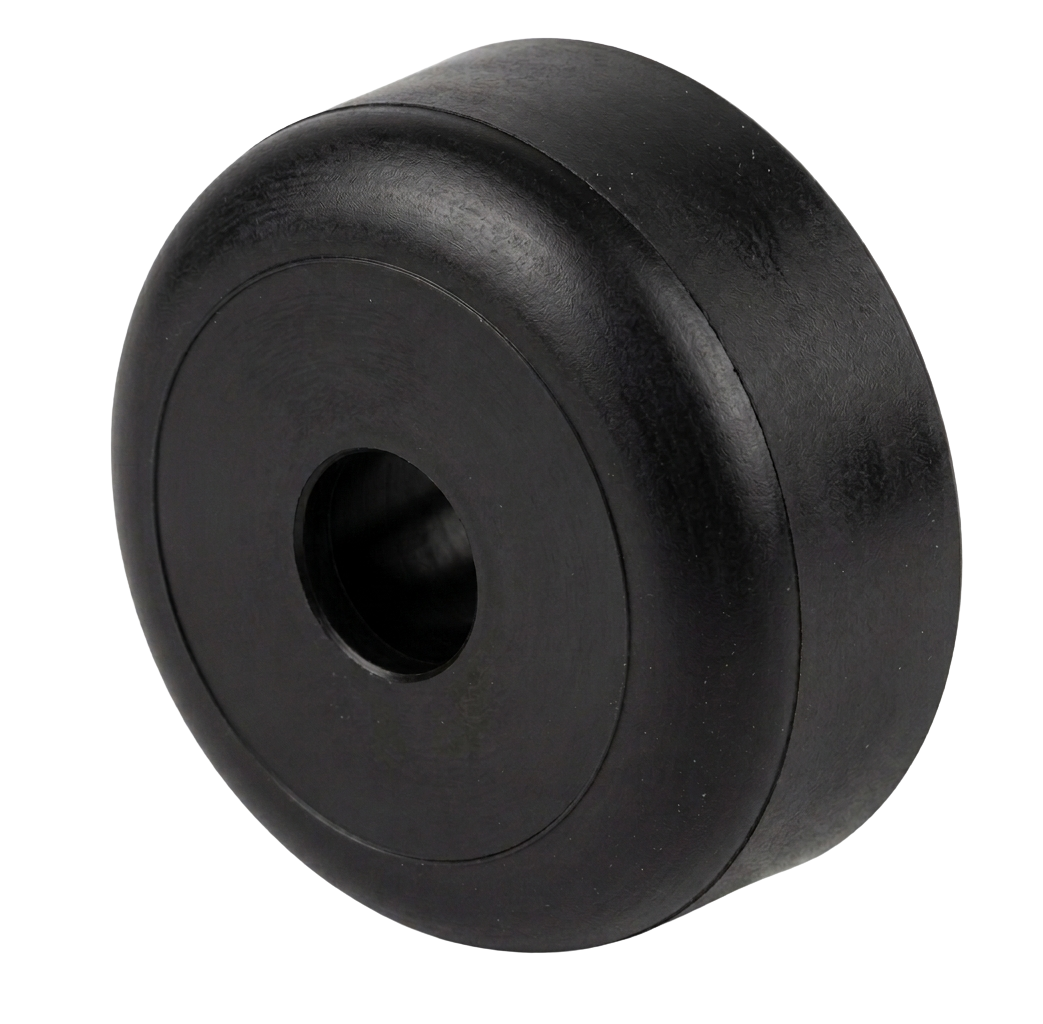
Heavy-duty rubber anti-vibration mounts.
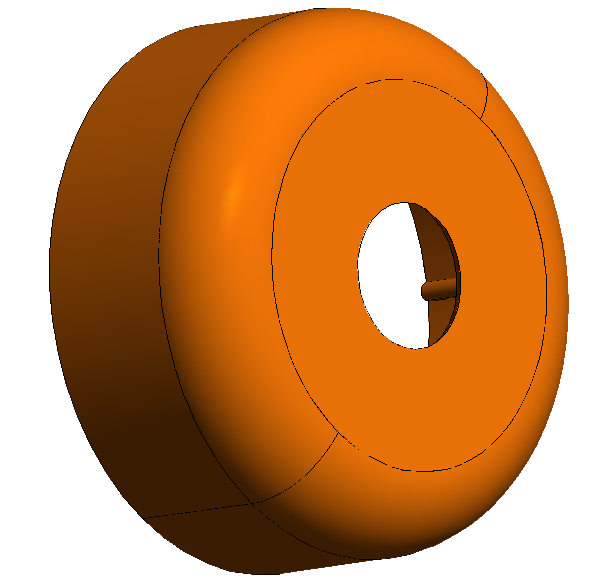
3D rendering of rubber anti-vibration part

The best vibration damping material is one that isolates or absorbs and dissipates vibrational energy rather than allowing it to transfer to other components.

Rubber is uniquely suited to this role as it is flexible enough to absorb and isolate vibration, yet durable enough to withstand demanding conditions.

Neoprene rubber is an excellent vibration damping material for many applications as it controls structure-borne noise and reduces high-frequency vibration.

EPDM rubber is another great option as it excels in demanding and high-temperature environments, offering strong resistance to weathering, and is a reliable choice for exterior-facing components.

Not all rubber compounds perform the same way, and selecting the right material for the operating environment is just as important as the component design itself.

Benefits of Anti-Vibration Rubber Products: 

Avoid machine damage & protect critical parts

Reduced downtime & lower maintenance costs

Improved operator safety & comfort

Smooth, quiet operation

Improved energy efficiency

Assurance that equipment lasts for full lifespan

Enhanced operational efficiency

Get More Anti-Vibration Component Information

Vibration is an unavoidable reality of industrial, off-highway and heavy equipment operation, but its consequences don't have to be. With the right anti-vibration components in place, equipment owners across off-highway, industrial, automation and other applications can avoid machine damage, reduce downtime and improve conditions for equipment and operators in the field.

At Caplugs, we engineer and manufacture component-level anti-vibration solutions, offering focused expertise, faster development and validation cycles and less complexity than a full NVH system program supplier.

We are also proud to announce the expanding of our rubber manufacturing footprint with a new facility being built in Malaysia this year, allowing us to better serve customers with high-quality, consistent rubber components at scale.

To learn more about how our rubber anti-vibration products can support your applications, contact us today at sales@caplugs.com or call directly at 1.888.CAPLUGS. We look forward to finding the right component-level solution for your equipment.

Request a Quote

When you need a custom protective part for a unique need, let the largest, most experienced in-house team of design engineers develop it for you from initial design to final production. We offer extensive custom molding solutions to meet your cost, performance, and production requirements.

Get A Quote