You’ve made a significant investment in heavy equipment for your operations, the last thing you need is an unexpected breakdown bringing your operations to a halt.
One of the leading causes of costly, unplanned downtime is hydraulic hose failure on heavy equipment, potentially costing thousands of dollars in project delays.
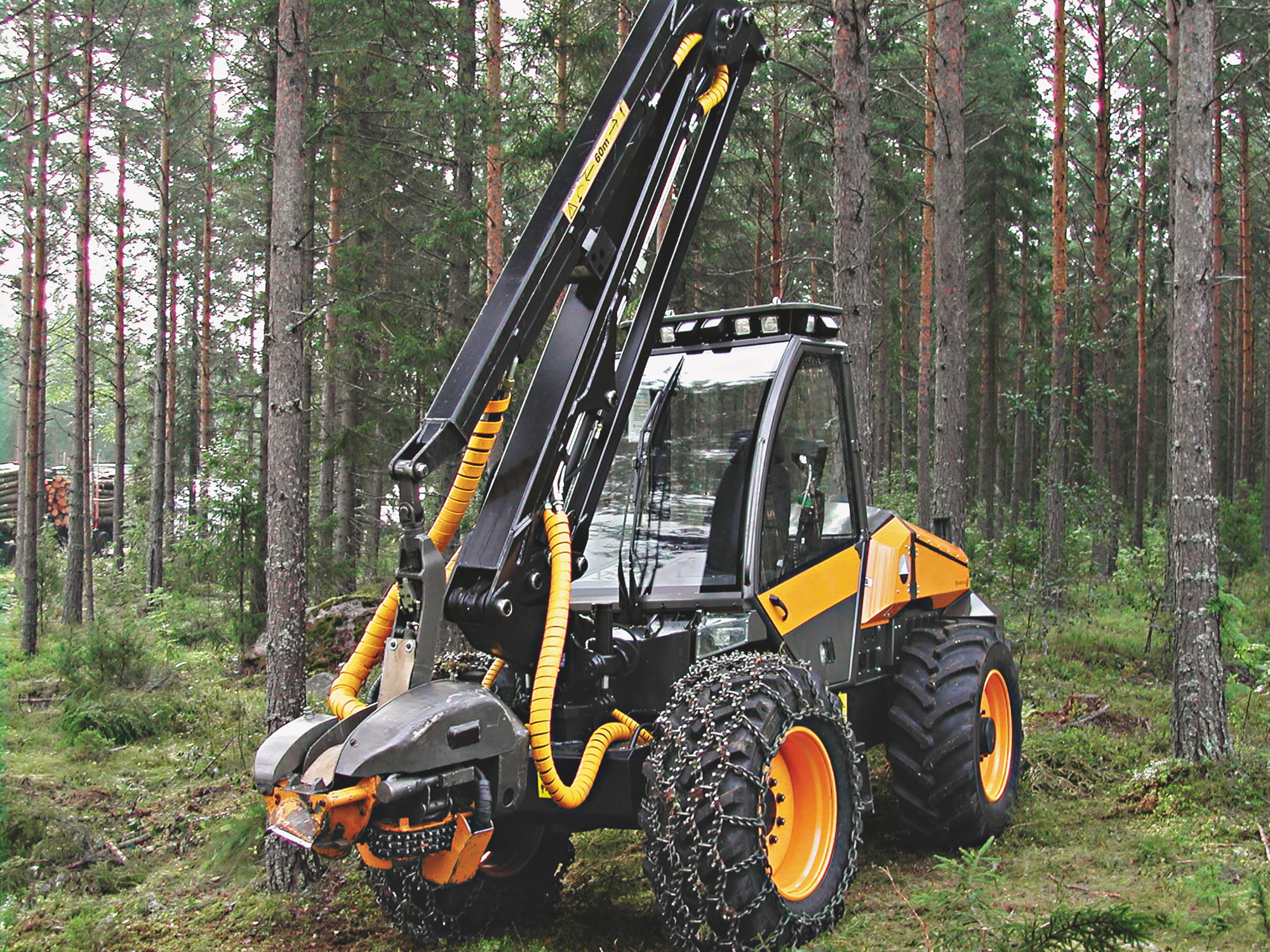
One simple way to guard against this is by adding protective products to your hydraulic lines. Hose protectors, sleeves, spiral wraps, caps and plugs ward off issues associated with abrasion, severe impacts and contaminations, ensuring fluids move safely through hydraulic equipment without unexpected leaks.
Whether you need hose protection for hydraulic equipment in construction, mining, agriculture, forestry or other off-highway vehicles, this expert guide answers common questions to help you select the right products for your fleet.
Yes, hose protection can prevent premature wear or loss of hydraulic hoses caused by continuous abrasion, debris, vibrating equipment and UV exposure.
While it won't keep a hose functional forever, adding a hose protector provides a solid physical barrier between the hose assembly and its environment. It fends off moisture, aggressive chemicals, and sharp foreign objects commonly found on job sites, preventing premature hose failure before its expected service life ends.
While it is difficult to say yes with certainty, choosing to add hose protection to your heavy equipment is generally considered a smart long-term investment.
Investing in hydraulic hose guards typically yields a high return on investment by preventing costly project delays, reducing maintenance frequency and protecting workers.
Unplanned downtime on a job site can cost thousands per hour. Protecting hoses from everyday wear reduces the frequency of full hose replacements and protects surrounding machinery, and workers, from high-pressure fluid bursts.
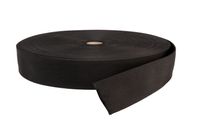
Yes. Many flexible options, such as polyester hydraulic hose sleeves, can be installed manually in seconds without tools.
Some hose protection like heavy duty hydraulic hose spiral wraps may require the help of tools such as a wrapping or bundling unit to install hoses more efficiently.
With options ranging from flexible sleeves to rigid plastic wraps, there is a protective product to fit virtually any hose size.
Minimal maintenance is required beyond regularly inspecting protectors during routine equipment checks for visible damage.
If a hose sleeve or spiral guard shows cuts, visible cracking, or thermal discoloration, it’s advised to change out the protector for a new one. If a hose ruptures in the field and damages the hose protection, perform a complete replacement of both the hydraulic hose and the protective sleeve or wrap before operating the machinery again. Damaged guards cannot provide full structural or burst protection.
Yes. Specialized hose burst protection sleeves safely contain and dissipate high-pressure pinhole leaks and hose bursts up to 700 bar (10,150 PSI).
Woven polyester hose sleeves feature a high yarn count engineered to suppress pinhole leaks and disperse fluid out the open ends of the sleeve, reducing the risk of dangerous fluid-injection injuries to operators and technicians on-site.
Yes. Hose protection materials are engineered to maintain integrity across wide temperature ranges, from -60°F up to 300°F.
• Heat & Sun: Polyester sleeves resist UV degradation and handle continuous temperatures up to 300°F. Plastic spiral guards typically withstand temperatures between 175°F and 280°F.
• Cold Environments: Many plastic wrap and rubber guard materials maintain flexibility without cracking in cold climates down to -40°F or -60°F.
Yes. Installing specialized hose bend restrictors near the hose-coupling junction prevents excessive bending and structural flex fatigue.
Continuous bending near fittings restricts fluid flow and accelerates hose failure (known as flex fatigue). Bend restrictors extend the overall life cycle of the assembly by supporting the hose's natural bend radius under pressure.
Hydraulic protection products utilize several durable materials depending on the operational environment:
• HDPE & PVC (Thermoplastics): Used for heavy-duty spiral wraps, hose covers, plastic caps, and plugs. Lightweight, cost-effective, and resistant to UV and abrasion.
• Polyester & Nylon Textiles: Used for high-pressure burst sleeves requiring flexibility, fluid containment, and high yarn strength.
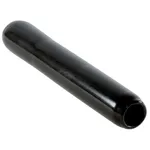
• Rubber & Vinyl: Used for flexible hose end covers, protective boots, and push-in caps or plugs that damp vibration and seal out contaminants.
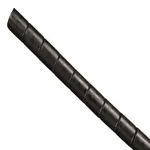
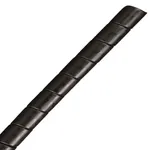
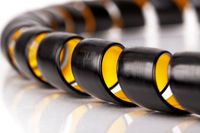
Hydraulic hose spiral wraps (typically made from heavy-duty HDPE or plastic) provide severe impact and abrasion resistance against rough ground and metal edges. Hydraulic hose sleeves (typically woven from polyester) are flexible options engineered primarily for high-pressure burst containment and pinhole leak suppression.
• Spiral Hose Wrap: Best for heavy equipment drag, crush resistance, and bundle management on construction and mining machinery.
• Hose Protection Sleeves: Best for worker safety near high-pressure fluid lines where burst protection and pinhole leak containment are required.
To select the correct hydraulic hose sleeve size, measure the outside diameter (OD) of your hose or hose bundle and add 10–20% extra room so the sleeve slides smoothly over couplings and flexes naturally during operation.
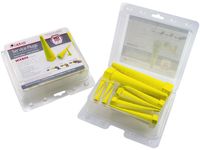
To select the correct hydraulic hose cap or plug size, match the thread type and size (JIC, ORFS, NPT) of the open port, using a cap for male fittings or a plug for female ports, to ensure a tight, leak-proof seal.
Hydraulic hose caps and plugs should be used whenever hydraulic lines are disconnected during maintenance, servicing, transit, or equipment storage.
Installing protective caps and plugs onto open hose ends and port fittings prevents fluid leaks, protects precision threads from impact damage, and stops environmental dirt, grit and moisture from contaminating sensitive hydraulic systems.
Yes. Beyond abrasion and impact resistance, quality sleeves and wraps provide several additional operational benefits:
• Excellent chemical resistance to hydraulic fluids, oxidizers, solvents, and acids
• Moisture resistance to prevent fitting corrosion
• Stain and oil resistance on job sites
• Abrasion resistance when wet
• Manufactured in a wide variety of widths
• Customization options, including custom cut lengths, colors and printed branding
Selecting the proper hydraulic hose sleeves, spiral wraps, or protective caps and plugs shouldn't be a guessing game when equipment reliability and worker safety are on the line.
Whether you need standard catalog parts, custom-cut lengths, or specialized caps and plugs for maintenance, Caplugs has the in-house engineering and manufacturing capabilities to deliver at any volume.
Ready to equip your machinery with the right hose protection products? Reach out to our hose protection experts at sales@caplugs.com or give us a call directly at 1.888.CAPLUGS to request samples or get technical assistance today.
Whether you require off-the-shelf furniture glides and finishing parts or have custom needs, Caplugs has the available product lines and expert in-house team to meet your specific protection needs.
For custom solutions, let the largest, most experienced in-house team of design engineers develop it for you from initial design to final production. We offer extensive custom molding solutions to meet your cost, performance, and production requirements.